
A storied foundation
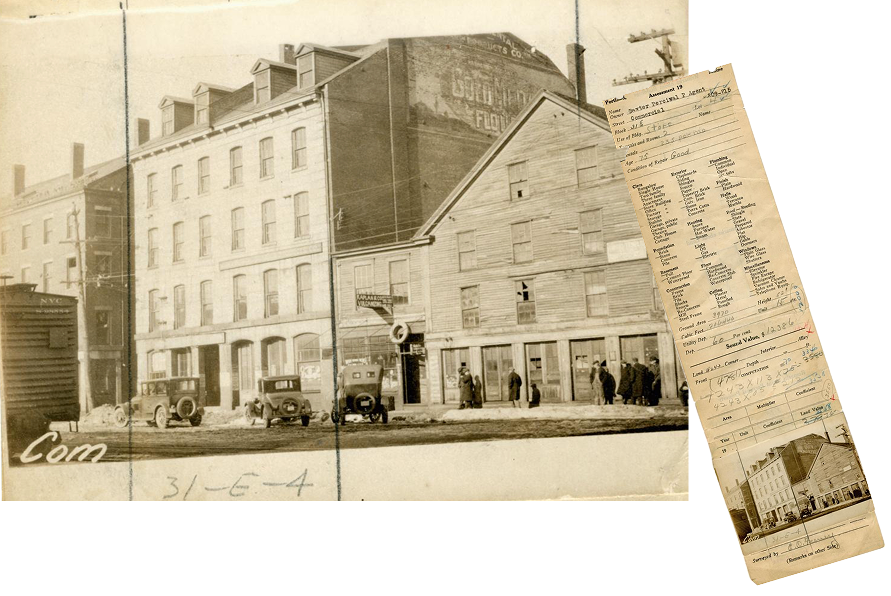
Long before Evalina, there was Granite Block.
A storied foundation
Long before Evalina, there was Granite Block.
Built with purpose and permanence, this building has long been a part of Portland’s working waterfront and deeply connected to the industries that shaped it.

You can still feel that history here
You can still feel that history here. From its early days as part of the city’s commercial backbone to its quiet evolution over time, this structure has always been defined by resilience and reinvention.
Named for the entrepreneurial Evalina Fox, an original owner of the property, the spirit of the hotel carries a sense of femininity that balances the strength of the stone. There is a quiet grace here … a softness that doesn’t diminish the structure, but complements it. Modern comforts are integrated with restraint, allowing the building’s character to remain the focal point.
Evalina is not just a place to stay. It’s a continuation of a story, one that now includes you.
From quarry to coast
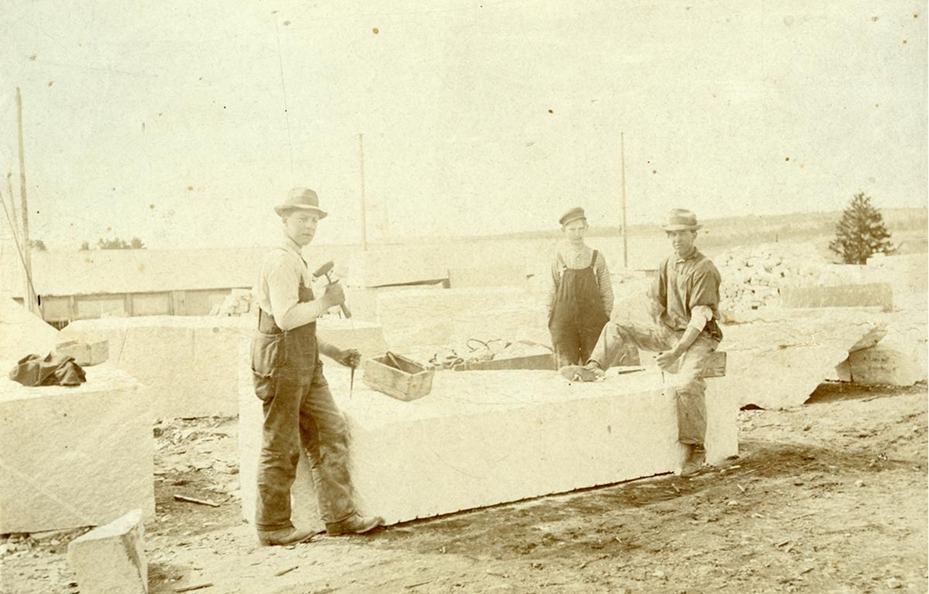
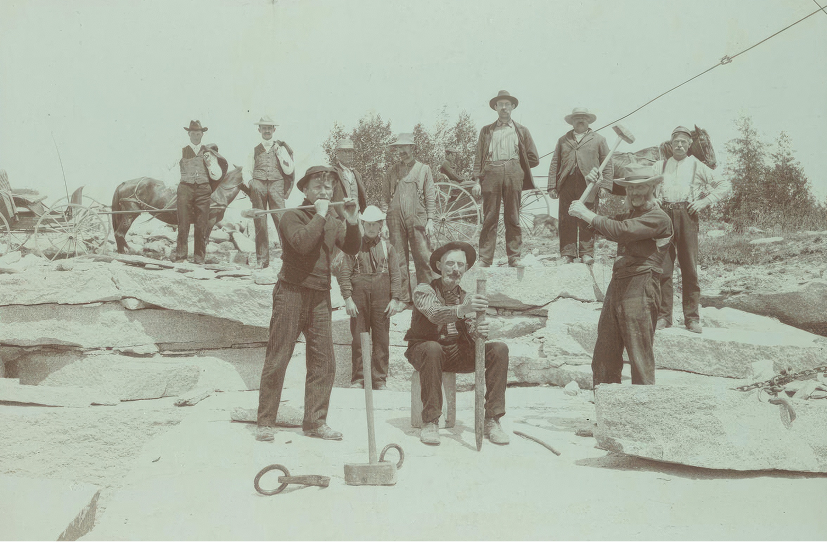
Maine’s granite industry was once among the most important in the United States,
shaping not only the state’s coastal communities but the built environment of cities across the country. Beginning in the early 1800s, quarries along the rugged coastline produced dense, high-quality stone prized for its strength and beauty. Maine granite found its way into landmarks such as Arlington National Cemetery and prominent buildings in Washington, D.C., New York, and Chicago. The work was labor-intensive and deeply skilled, often carried out by immigrant stonecutters, including a large community of Italian artisans who brought centuries-old carving traditions with them. In Hallowell, these workers also played a role in early labor organizing, forming one of Maine’s earliest unions in 1877.
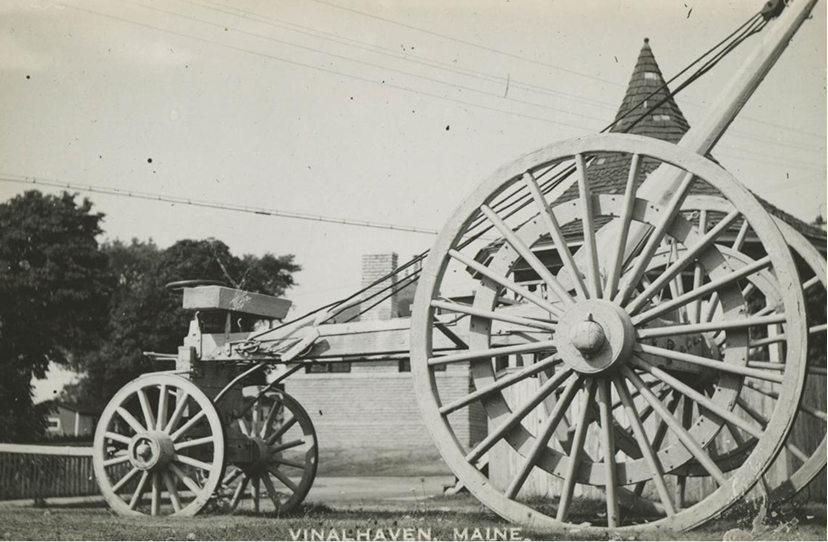
Moving such immense stone was a feat. Massive blocks were transported using wooden stone wagons known as galamanders, sometimes called “Jumbo” wagons, which could carry granite suspended beneath their rear axles. Using a system of block and tackle, workers carefully raised, balanced, and maneuvered each piece, guiding it from quarry to shoreline for shipment. Over time, the industry evolved from these highly manual methods to more mechanized processes, but demand began to decline in the mid-20th century with the rise of steel-reinforced concrete.

Today, while large-scale quarrying has largely faded, Maine granite endures in restoration work and fine fabrication, with organizations like the Maine Granite Industry Historical Society preserving the stories, craftsmanship, and ingenuity that defined this remarkable chapter of the state’s history.

Stay in the loop